
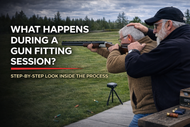
What Happens During a Gun Fitting Session? A Step-by-Step Look
Posted by Xcel Shooting Sports/Passionate Outlaws on Apr 2nd 2026
What Happens During a Gun Fitting Session?
For many shooters, the phrase gun fitting session sounds important — but also a little mysterious.
What actually happens?
What gets adjusted?
Do you need to bring your own shotgun?
Is it only for advanced shooters?
At Xcel Shooting Sports, we believe the process should feel clear, helpful, and built around the shooter from the very beginning.
A gun fitting session is not about pressure.
It’s not about making unnecessary changes.
And it’s not about forcing a shooter into equipment.
It’s about understanding how you shoot, how your current setup is working, and what adjustments may help you shoot with more comfort, confidence, and consistency.
It Starts With a Conversation
Before any adjustments are made, we start by learning about you.
We want to understand:
- what discipline you shoot
- how often you shoot
- what shotgun you’re currently using
- what feels right
- what feels off
- what you want to improve
Some shooters come in because they feel excessive recoil.
Some are missing targets they feel they should be breaking.
Others simply know something isn’t quite right, even if they can’t yet explain why.
That conversation matters, because fitting should always begin with the shooter — not the gun.
Step One: Vision and Alignment
Before we focus on the shotgun itself, we look at how your visual system is working with your setup.
This can include:
- eye dominance
- alignment down the rib
- how naturally your eye comes into position
- whether visual inconsistency may be affecting performance
This is one of the most overlooked parts of the process.
A shooter can have a quality shotgun and still struggle if vision and alignment are not working together consistently. That’s why we do not skip this step.
Step Two: Watching the Mount
Once we understand the shooter’s goals and visual starting point, we watch how the gun comes to the face and shoulder.
We’re looking for things like:
- whether the mount is natural or forced
- whether the shooter is lifting their head
- how consistently the gun comes into position
- whether the setup supports repeatable movement
This part tells us a lot.
Sometimes the issue isn’t dramatic. A very small inconsistency in mount or head position can create a much larger issue downrange.
Step Three: Evaluating Current Fit
Next, we evaluate how the shotgun is currently fitting the shooter.
Depending on the gun and the shooter, this may involve looking at:
- comb height
- length of pull
- cast
- drop
- balance
- overall feel and control
But fitting is never just about numbers on paper.
A measurement may look acceptable, but if the gun doesn’t support the shooter’s natural movement, comfort, and eye position, it still may not be right.
At Xcel, fit is functional. We care about how the gun works with the shooter in real use.
Step Four: Identifying What Needs to Change
Once we’ve seen the shooter mount the gun, evaluated alignment, and looked at the current fit, we start identifying what may need to change.
Sometimes that means a subtle adjustment.
Sometimes it confirms that the current shotgun is close, but needs refinement.
Sometimes it tells us that the shooter has been compensating for a poor fit without realizing it.
This is where experience matters.
The goal is not to overcomplicate things. It is to identify the adjustments that actually matter.
Step Five: Making Targeted Adjustments
If adjustments are appropriate, we make them with purpose.
That may include changes that improve:
- comfort
- eye position
- recoil feel
- mount consistency
- overall control
The key word is targeted.
A proper fitting session is not about changing everything at once. It’s about making thoughtful changes based on what the shooter is actually experiencing.
Step Six: Re-Evaluate and Confirm
After adjustments are made, we re-evaluate.
We want to see whether the change improved:
- alignment
- comfort
- consistency
- confidence
This matters because fitting is not theory — it’s feedback.
The shooter should feel the difference.
The mount should feel more natural.
The system should work better together.
Is a Gun Fitting Session Only for Serious Competitors?
Not at all.
Gun fitting helps a wide range of shooters, including:
- new shooters who want to start the right way
- experienced shooters trying to solve persistent frustration
- competitors looking for more consistency
- shooters who want more comfort and confidence from their current setup
If something feels off, or if you simply want to know whether your gun is truly working for you, a fitting session can provide real clarity.
What to Bring to a Gun Fitting Session
If you’re planning a fitting session, it helps to bring:
- your current shotgun
- any gear you normally shoot with
- questions about what you’ve been experiencing
- an open mind
You do not need to know exactly what is wrong before you come in. That’s part of what the process is designed to uncover.
The Xcel Difference
At Xcel Shooting Sports, a gun fitting session is never about rushing toward a sale.
It’s about understanding the shooter first.
That’s why our process follows a clear order:
Vision first.
Fit second.
Equipment third.
When that foundation is right, everything else becomes easier to evaluate and improve.
Start With the Right Process
If you’ve ever wondered whether your shotgun truly fits you, a fitting session is one of the most valuable places to start.
It can remove guesswork.
It can reveal issues you may not have recognized.
And it can help you move forward with more confidence.
If you’re ready to better understand your fit, your setup, and your performance, we’d be glad to help.
Talk to Team Xcel
Call 406-209-8922
Visit a demo location
Because the right shotgun experience doesn’t begin with a guess.
It begins with the right process.